Metallurgical Crisis Threatens Community Budgets: How Economic Downturn Impacts Local Governance
Falling tax revenues from the mining and metallurgical sector are creating deficits in state and local budgets, potentially leading to cuts in social and infrastructure programs.
 🧠AI Analysis
Photo: RBC-Ukraine
Key points
- Tax revenues from metallurgy have dropped significantly due to logistics and energy issues.
- Industrial hubs like Kryvyi Rih are forced to cut spending on infrastructure and healthcare.
- The industry crisis threatens 70,000 jobs and 15% of the country's foreign exchange earnings.
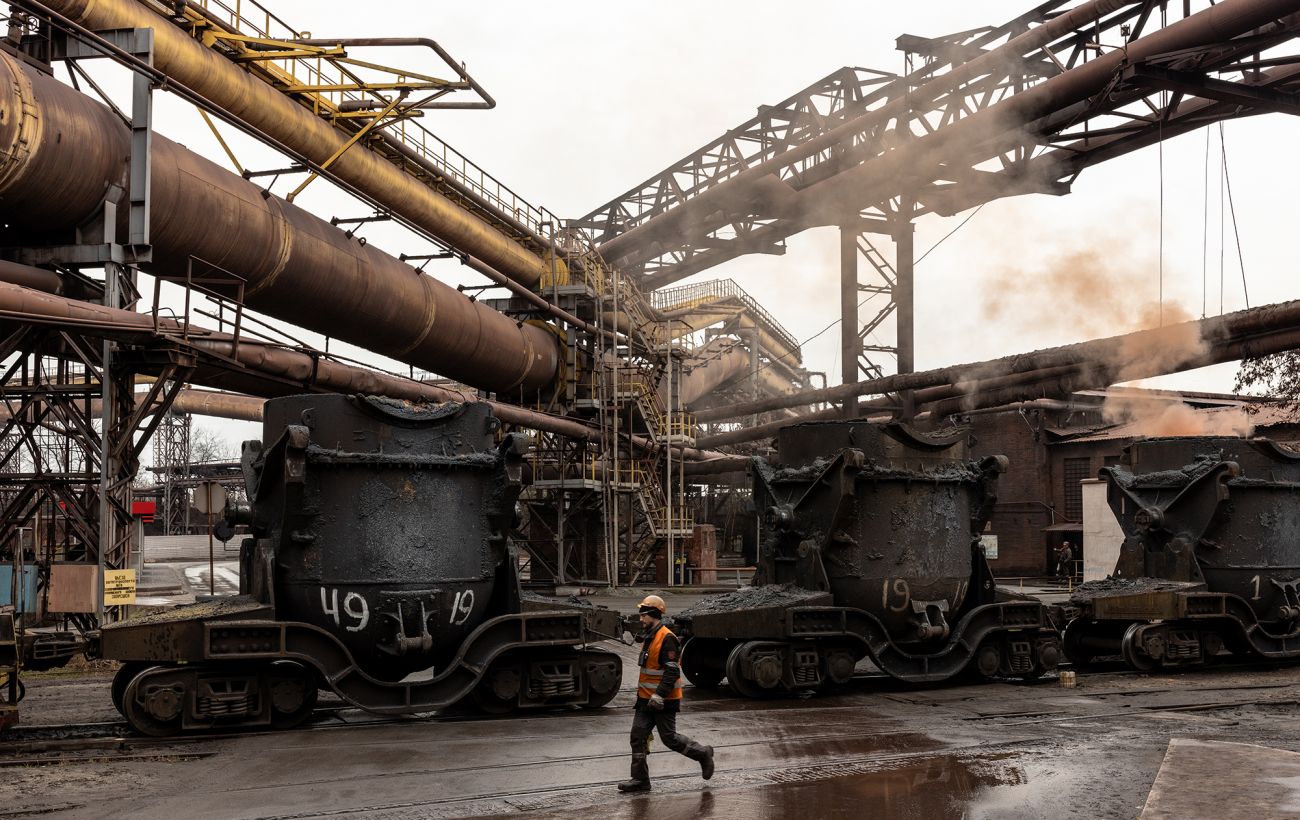
Ukraine's mining and metallurgical complex (MMC), long considered the backbone of the national economy, is currently facing a profound crisis. The industry's struggles have evolved from corporate issues into a systemic threat to state and local finances. Reduced production directly translates into lower tax revenues, jeopardizing defense funding and the development of territorial communities.
Challenges for the Industrial Sector
Over the past year, the situation has worsened significantly due to persistent shelling, energy shortages, and complex logistics. According to analysts, major market players are showing negative trends. For instance, the Metinvest Group reduced its tax payments by 6% to UAH 13 billion in the first nine months of 2026. The most significant drops were seen in VAT (36%) and corporate income tax (26%) contributions.
Yuriy Ryzhenkov, CEO of Metinvest, noted: "We are at a critical point," emphasizing that the inability to export steel risks losing billions in taxes and thousands of jobs. A similar situation is observed at other plants: the Dnipro Metallurgical Plant cut its tax contributions by 46%, while ArcelorMittal Kryvyi Rih expects a sharp decline following a production halt in September.
Impact on Local Communities and Development
For industrial cities, the MMC crisis poses a direct threat to social stability. Personal income tax and land taxes from these enterprises form the bulk of local budgets. In Kryvyi Rih, authorities have already announced a budget sequester, meaning a halt to road repairs, school modernizations, and hospital upgrades. Furthermore, communities are losing the ability to co-finance international grant programs.
The crisis triggers a chain reaction: the decline of industrial giants hits related sectors such as energy, transport, and machinery. Small businesses and the service sector in these regions also lose revenue as consumer spending drops. Experts stress that stabilizing energy supplies and unblocking logistics routes is not just about supporting individual companies, but about preserving the tax base of the entire state.
Source RBC-Ukraine — rbc.ua/ukr/news/kriza-metalurgiyi-pererostae-krizu-byudzhetiv-17954… ↗
Read next
 🛡️Security
Technological Leap: Ukrainian Ground Robotic Systems Shift to Artificial Intelligence
Ukraine's defense industry is actively integrating artificial intelligence into ground robotic complexes to reduce operators' vulnerability.
 💡Tech
Tech Enthusiast Adapts ChatGPT for the Retro Super Nintendo Console
American journalist Benj Edwards has created a miniature version of artificial intelligence for the legendary 1990s gaming console. The project bridges modern machine lea…
 🛡️Security
In October, Russia Used Over Four Thousand Jet Drones Against Ukraine — Ministry of Defense
In October, Russian forces significantly increased the intensity of air strikes against Ukraine, employing a record number of drones and ballistic missiles.
 🏛️Politics
NABU notifies former Deputy Prime Minister of suspicion in budget embezzlement case
The National Anti-Corruption Bureau has uncovered a scheme of fictitious employment organized by a former high-ranking official for personal purposes.
 🧠AI Analysis
US and Global Politics: Senator Critically Compares Leaders of Russia and China
US Senator John Kennedy compared Vladimir Putin and Xi Jinping to a fictional villain, urging President Donald Trump to show strength.
 💼Economy
MP Criticizes Ministry of Economy's Low Starting Price for Scrap Metal Exports
MP Musa Magomedov has called the proposed starting price of 27 euros per ton for scrap metal exports economically unjustified and damaging to the state budget.